Two Approaches to Earth Retention
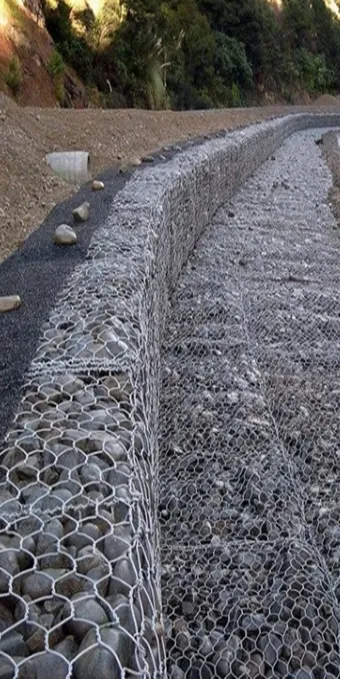
Retaining walls hold back soil on sloped sites, but they do it in very different ways. A poured concrete or block wall is a rigid, monolithic barrier that resists earth pressure through mass and reinforcement. A gabion wall is a flexible, free-draining structure built from rock-filled wire baskets stacked to form a gravity mass. Both are proven for roads, riverbanks, terraces and landscaping, yet they behave differently over time and suit different budgets, soils and aesthetics. Understanding those differences early prevents costly redesigns. As a manufacturer of gabion mesh in Hebei, China, we frequently help engineers and contractors weigh these systems before a single basket or form is ordered, so this comparison reflects real project questions rather than marketing claims. The right call hinges on hydrology, soil strength, wall height, available materials and the look you want, and rarely on a single deciding factor.
Drainage and Hydrostatic Pressure
The single biggest functional difference is water. Concrete walls are impermeable, so they trap groundwater behind them. Without weep holes, perforated drains and granular backfill, hydrostatic pressure builds up and is a leading cause of wall failure. Gabions are the opposite: water passes freely through the gaps between fill stones, so pressure rarely accumulates. This makes gabions especially attractive for riverbanks, culvert outlets, slope protection and any site with high or fluctuating water tables. The free-draining nature also reduces frost-heave problems in cold climates. For many drainage-critical applications, a gabion wall removes an entire category of risk that concrete designs must engineer around, simplifying both design and long-term maintenance.
Cost, Speed and Site Conditions
Concrete walls require formwork, curing time, rebar and skilled labor, and they often need deep footings. Gabions need no formwork or curing; baskets are assembled, positioned and filled with locally available stone, which can dramatically cut haulage and material costs. On remote or difficult-access sites, gabions are often the more economical choice because much of the bulk is sourced nearby. However, where fill stone is scarce or expensive, that advantage shrinks. Gabion construction is also more forgiving of poor ground because the flexible structure tolerates differential settlement, whereas a rigid concrete wall may crack. Labor for gabions is lower-skill but more physical, which can be an advantage in regions where formwork specialists are limited. Construction can also begin and finish faster because there is no curing window, letting projects move to backfill and finishing sooner, which shortens program time and reduces the weather risk that delays concrete pours.
Durability, Aesthetics and Environment
Concrete is extremely durable but can crack, spall and stain, and repairs are difficult. A gabion wall's longevity depends on its wire coating, not the steel alone: galvanized, Galfan (Zn-Al alloy) and PVC-coated meshes offer increasing corrosion resistance, with Galfan and PVC suited to coastal or aggressive environments. Aesthetically, gabions deliver a natural stone look that ages into the landscape and supports vegetation, making them popular for eco-sensitive and architectural projects. Concrete offers smoother, more formal finishes. From a sustainability standpoint, gabions use less cement, can incorporate recycled stone and are partly reusable. For green infrastructure and biodiversity goals, gabions usually score higher. They can be planted with creepers or filled with soil pockets so vegetation gradually colonizes the face, softening the structure visually and adding habitat value that bare concrete cannot match.
Choosing for Your Project
There is no universal winner. Choose concrete when you need a vertical, formal, watertight wall in tight urban space with limited footprint, or where local stone is unavailable. Choose gabions when drainage matters, when ground is soft or settling, when local stone is cheap, or when you want a natural appearance and faster, lower-skill installation. Many modern projects even combine them: a concrete core faced with gabions, or gabion toe protection in front of a structural wall. The right answer depends on hydrology, soil, height, budget and design intent, so it pays to evaluate all of them rather than defaulting to habit.
Source Gabion Mesh Built for Your Specification
If a gabion solution fits your project, the quality of the wire and coating determines how long it will perform. Zhongman manufactures and exports gabion mesh, welded and woven baskets, Reno mattresses and slope-protection systems from Hebei, China, with galvanized, Galfan (Zn-Al) and PVC coating options to match your environment. We supply to ASTM and EN standards, customize mesh aperture, wire diameter and basket dimensions, and pack for safe container export worldwide. Tell us your wall height, site conditions and target standard, and our team will recommend specifications and provide a competitive quotation. Contact Zhongman today to request a spec sheet or sample for your retaining wall.