Two Mesh Geometries, Two Purposes
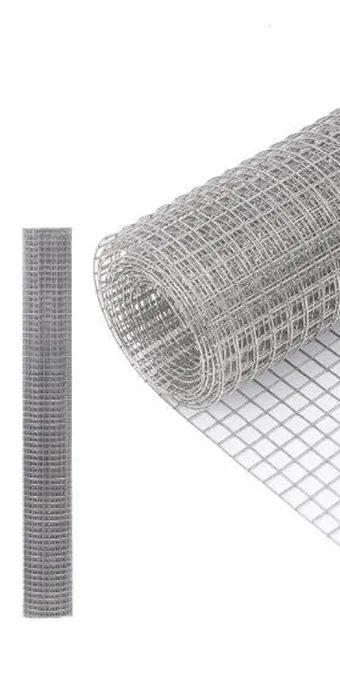
Wire mesh comes in many opening shapes, but two dominate the market: hexagonal and square. They look different and behave differently, and confusing them leads to poor product choices. Hexagonal mesh, often called chicken wire or netting, is made by twisting wires into a honeycomb pattern, giving a flexible, conforming fabric. Square or rectangular mesh—whether woven or welded—has straight wires crossing at right angles, producing a rigid, dimensionally stable panel. The hexagonal pattern excels at lightweight containment and conforming to curved surfaces, while square mesh provides structural strength and a clean, professional appearance. For buyers, the right geometry depends on whether the application needs flexibility and economy or rigidity and load capacity. At Zhongman we manufacture both families—from twisted hexagonal netting and gabion mesh to welded and woven square panels—so we can match the geometry precisely to each customer's functional and budget requirements.
How Each Type Is Made
Hexagonal mesh is produced on specialized machines that twist adjacent wires together two or three times at each junction, forming the characteristic six-sided openings. This double or triple twist resists unraveling even if a single wire is cut, which is why heavy hexagonal mesh is used for gabions and erosion control. Square mesh is made one of two ways: welded mesh joins straight wires by resistance welding at each intersection, creating rigid panels; woven mesh interlaces wires over and under like cloth, allowing precise apertures for filtration and sieving. The manufacturing method shapes the product's character. Twisted hexagonal fabric is springy and forgiving, welded square mesh is stiff and strong, and woven square mesh is precise and fine. We operate dedicated lines for each process, ensuring the weave or twist quality that a given application demands.
Strength and Structural Behavior
Square mesh, particularly welded panels, carries load and holds its shape, making it suitable for fencing, reinforcement, machine guards, and structural cages where rigidity matters. The welded intersections transfer stress across the grid. Hexagonal mesh is not designed for rigidity; instead its strength lies in tensile flexibility and the way the twisted construction distributes pulling forces around the honeycomb. Heavy galvanized or Galfan-coated hexagonal mesh packed with stone forms gabion structures that flex with ground movement and resist hydraulic forces—a behavior square mesh cannot replicate as economically. Conversely, you would not use flexible hexagonal netting where a flat, load-bearing panel is required. Understanding this difference prevents specification errors. We guide customers toward hexagonal constructions for conforming, flexible, ground-engaging uses and toward square welded or woven mesh wherever dimensional stability and load capacity govern.
Typical Applications Compared
Hexagonal mesh serves poultry and small-animal enclosures, plaster reinforcement, light fencing, plant protection, and—in heavy galvanized or PVC-coated form—gabion baskets and reno mattresses for erosion control and retaining structures. Its flexibility and low cost make it ideal where containment matters more than strength. Square mesh covers security and perimeter fencing, concrete reinforcement, mining screens, machine guarding, animal cages requiring rigidity, architectural facades, and precise industrial filtration. The clean grid also looks more finished, which matters for visible installations. Coatings extend both families: galvanized for general corrosion resistance, Galfan zinc-aluminum for marine and long-life duty, and PVC for color, extra protection, and a smooth finish. Because we produce hexagonal, welded, woven, and gabion products together, customers can combine, for example, gabion mesh and welded fence panels in one consolidated export shipment, simplifying procurement across a project.
Cost, Coatings, and Standards
Hexagonal netting generally costs less per square meter than welded square panels because it uses less wire and weaves faster, making it the economical choice for large-area, light-duty coverage. Square welded mesh costs more but delivers rigidity and longer service in structural roles. Both can be specified to recognized standards—gabion mesh to ASTM A975 or EN 10223-3, and woven cloth to ASTM E2016—and supplied galvanized, Galfan, or PVC-coated. When sourcing, confirm wire diameter, coating weight, aperture, and the relevant standard so the delivered product matches your design and passes inspection.
Specify With Zhongman
Zhongman is a Hebei manufacturer and exporter of both hexagonal and square wire mesh, including twisted netting, gabions, reno mattresses, welded panels, and woven cloth, all available galvanized, Galfan zinc-aluminum, or PVC-coated. We customize wire diameter, aperture, coating, and panel size to ASTM and EN standards, supply export-grade packing, and consolidate mixed product lines into single containers. Tell us your application—containment, reinforcement, erosion control, or fencing—and we will recommend the right geometry and coating and provide samples plus a competitive quotation. Reach out to discuss your project requirements.