Why Fill Quality Matters
The wire basket only contains the stone; it is the rock fill that gives a gabion its mass, strength and appearance. Poor fill, wrong size, soft stone or careless packing, causes bulging, settlement and an untidy finish, while good fill produces a dense, durable, attractive structure. Three decisions drive fill quality: the stone size relative to mesh aperture, the rock type and density, and the packing method. Getting these right is as important as choosing the basket itself. This guide covers each so you can order the correct tonnage, avoid common mistakes and build a gabion that performs structurally and looks the way you intend for decades.
Choosing the Right Stone Size
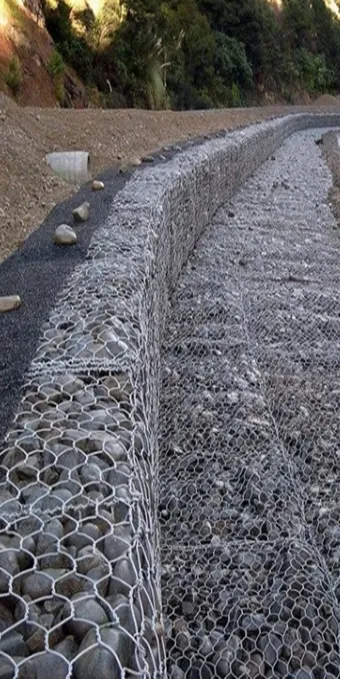
Fill stone must be larger than the mesh opening so it cannot fall out, with a common rule that the smallest dimension exceeds the aperture, and many specifications call for stone between one and two times the mesh size. For typical gabions this means angular rock roughly 100 to 200 mm across. Use a graded range rather than a single size so smaller pieces fill the gaps between larger ones and reduce voids. Avoid stone so large it leaves big gaps or so small it escapes the mesh. Angular, hard, durable rock such as granite, basalt or quarried limestone is preferred; avoid soft, friable or rounded stone that packs poorly and weathers quickly. Angular faces interlock and stay put, whereas rounded river cobbles roll and shift, leaving voids and encouraging the basket to bulge under load.
Density and Tonnage Calculations
To order fill, calculate basket volume, then account for voids. Loose-tipped gabion fill leaves about 30 to 40 percent void space, so a 1 cubic meter basket holds roughly 0.6 to 0.7 cubic meters of solid rock. Multiply by rock density to get weight; common stone weighs around 2.4 to 2.7 tonnes per cubic meter solid, giving a placed gabion density of roughly 1.5 to 1.8 tonnes per cubic meter. Always order a margin above the calculated figure for breakage and settlement. Accurate density assumptions also matter structurally, because the wall's stability as a gravity mass depends on achieving the design weight, so confirm your stone's specific gravity before finalizing quantities.
Best Packing Practices
How you place stone is as important as what you order. Hand-pack the visible outer faces with selected, tightly fitted stone for a clean, dense appearance, and machine-place the interior fill to save time. Fill in lifts of about 300 mm rather than dumping the whole basket at once, and minimize voids as you go. Install internal bracing wires between opposing faces every lift to prevent the basket from bulging outward under load. Fill each basket slightly higher than its top edge before closing the lid, because stone settles. Even, well-packed lifts with proper bracing are what prevent the deformation that ruins poorly filled gabions. On architectural walls, sorting stone by color and size before packing the faces produces a consistent, deliberate finish that distinguishes a premium installation from a rough one.
Common Mistakes to Avoid
The most frequent errors are using stone too small that washes or falls out, using rounded or soft stone that packs loosely and weathers, skipping internal bracing so baskets bulge, and filling in one big dump that leaves large voids and uneven settlement. Underestimating void space leads to ordering too little stone and project delays. Neglecting hand-packing of faces produces an untidy wall. Forgetting to over-fill before closing lids causes visible slumping later. Avoiding these mistakes costs nothing but attention, and it is the difference between a gabion that looks and performs as designed and one that disappoints. Plan stone size, tonnage and packing method before delivery day.
Get Baskets Matched to Your Fill from Zhongman
The right mesh aperture and wire diameter make filling easier and the finished wall stronger. Zhongman manufactures and exports gabion baskets, welded and woven mesh, Reno mattresses and slope-protection systems from Hebei, China, with galvanized, Galfan (Zn-Al) and PVC coatings and customizable mesh size, wire diameter and basket dimensions to ASTM and EN standards. We help you match aperture to your available stone size and supply bracing and lacing wire, all packed for efficient container export. Tell us your stone size and wall dimensions and we will recommend baskets and provide a quotation. Contact Zhongman to request a spec sheet or sample for your project.