Why Buyers Source Gabions from China
China remains the world's largest supplier of gabion baskets, and for good reason. Concentrated wire-drawing, weaving and welding capacity in provinces such as Hebei allows manufacturers to offer competitive pricing without compromising on engineering quality. For contractors and distributors abroad, the appeal is straightforward: volume availability, the ability to order custom dimensions, and a single source that can also supply matched accessories like geotextile, lacing wire and spiral binders. As a Hebei-based manufacturer and exporter, Zhongman produces both welded and woven (double-twist) gabions alongside a broader mesh range, which lets buyers consolidate orders. The trick to a successful import is not simply chasing the lowest unit price, but qualifying the factory on raw material, coating mass and tolerance control. A clear specification at the inquiry stage protects you from costly substitutions later, and gives the manufacturer the detail needed to quote accurately the first time around.
Specifying the Right Gabion
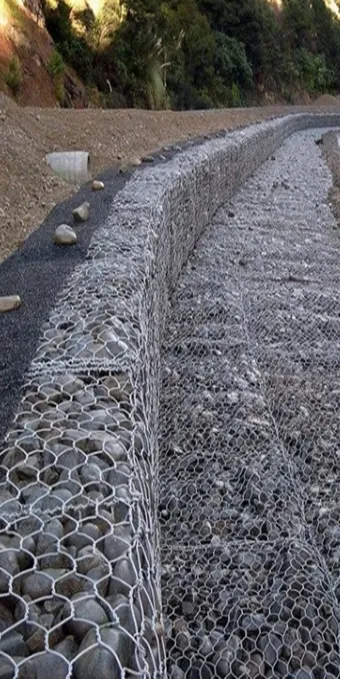
Start with the basics every quotation needs: basket dimensions (length x width x height), mesh aperture, wire diameter and panel construction. Woven gabions typically use hexagonal double-twist mesh in apertures like 80x100mm or 60x80mm, with wire gauges from 2.0mm to 3.0mm depending on the structure's height and loading. Welded gabions use square or rectangular apertures such as 76x76mm or 50x100mm, formed from heavier wire (often 3.0-5.0mm) for a rigid, architectural finish. Confirm whether you need reinforced selvedge edges, internal diaphragms (cross panels every metre to control bulging), and the binding method. Zhongman can manufacture to ASTM A975, EN 10223-3 or client drawings, so spell out the governing standard. Stating intended use, river bank protection, retaining wall, rockfall, or decorative facade, helps the factory recommend an appropriate construction and avoids over- or under-engineering the order.
Coatings and Corrosion Protection
Coating is where long-term value is won or lost, so never leave it vague. The three common options are heavy galvanized (zinc), Galfan (a zinc-aluminium alloy, typically 95% Zn / 5% Al), and PVC over a galvanized or Galfan core. Galvanized coating mass should be specified in grams per square metre; for demanding environments EN 10244-2 Class A coating is the benchmark. Galfan offers roughly two to three times the corrosion resistance of conventional galvanizing for the same coating weight, making it the smart choice for permanent hydraulic works. PVC coating adds a polymer jacket, usually green, black or grey, ideal for marine, polluted or aggressive soils, and the underlying metallic coating should still meet a defined class. When you request a quote, name the coating type, the metallic coating mass, and for PVC the nominal and minimum film thickness. These three numbers tell the manufacturer exactly what to build.
Certification, Testing and Quality Control
Documentation turns a low price into a defensible purchase. Ask for mill test certificates on the wire, coating mass test reports and dimensional inspection records tied to your specific order, not generic samples. Reputable Chinese exporters provide ISO 9001 quality systems plus product compliance to ASTM or EN standards, and many can arrange third-party inspection by SGS, BV or TUV before shipment. Where projects require CE marking under EN 10223-3, confirm the factory can supply the Declaration of Performance. It is worth requesting pre-production photos and, for larger contracts, a video of the actual goods being packed. Zhongman supports buyer inspections and third-party testing as standard practice, because transparent QC reduces disputes on arrival. Agree the inspection criteria and acceptance tolerances in the purchase order itself, so both sides are measuring success against the same yardstick rather than negotiating after the container has sailed.
Packaging, Freight and Landed Cost
Gabions ship flat-folded and bundled on pallets to maximise container utilisation; a well-packed 40HQ can carry a substantial volume of baskets plus accessories. Confirm whether lacing wire, stiffeners and geotextile are included or quoted separately, as these affect both price and assembly labour on site. Discuss Incoterms early: FOB suits buyers with their own forwarders, while CIF or DAP shifts logistics to the supplier. Factor in the real landed cost, ocean freight, insurance, duties and inland delivery, rather than comparing ex-works prices alone. Lead times generally run a few weeks for production plus transit, so plan procurement against your construction schedule. If you are weighing suppliers or scoping a project, send us your drawings, target coating class and quantities. Zhongman will return a detailed quotation with specifications, packing list and lead time, so you can compare like for like and order with confidence.