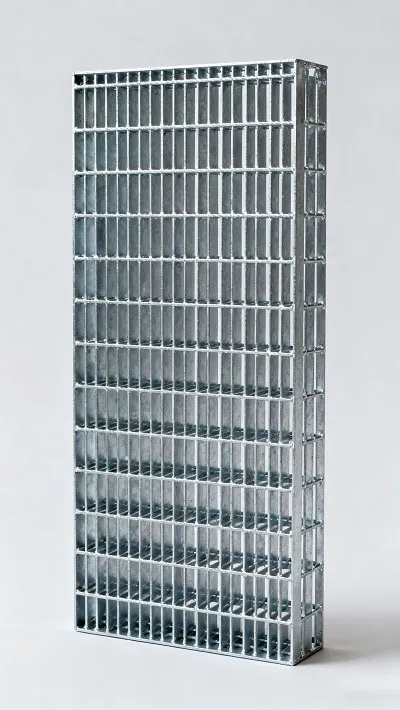
The Surface Decision That Affects Safety
Once you have selected the grating type, span and bearing bar, one surface decision remains: serrated or plain. It sounds minor, but it directly affects underfoot safety. Plain grating has smooth-topped bearing bars and a clean appearance. Serrated grating has notched teeth machined or punched along the top edge of each bearing bar, creating a toothed surface that grips footwear and resists sliding. In environments where oil, water, ice, mud or chemicals can coat the walking surface, that grip is the difference between a routine platform and a slip hazard. Because grating is so often used outdoors and in industrial settings, choosing the correct surface is a genuine safety and liability decision, not just an aesthetic preference.
How Serrations Improve Slip Resistance
Serrations work by breaking up the contact surface into a series of sharp teeth that bite into the sole of a boot and pierce thin films of liquid or contamination. This dramatically increases the coefficient of friction compared with a smooth bar top, particularly when the surface is wet or oily. The improvement is most valuable on ramps, sloped walkways, stair treads, offshore platforms, food and chemical plants, and anywhere washdowns or weather keep the deck slick. Many workplace safety standards and insurers favor or require serrated grating on elevated and inclined access. While serrations slightly reduce the smooth bearing area, the structural load capacity is essentially the same, so you gain slip resistance without sacrificing meaningful strength.
When Plain Grating Is the Better Choice
Plain grating still has plenty of valid uses. It costs less than serrated because it skips the notching operation, so for dry, low-traffic, indoor or non-walking applications it is the economical default. It is preferred where a smooth surface is needed for rolling carts, trolleys or wheeled equipment, since serrations can catch small wheels. Plain grating is also easier to clean and is common in drainage covers, trench grates, mezzanines in dry plants, and infill where foot traffic is minimal. If the surface will rarely be walked on, will stay dry, or must accommodate wheels, plain grating delivers the same load performance at lower cost. The key is to honestly assess slip risk before defaulting to the cheaper option.
Coatings, Standards and Clearance Notes
Both surfaces are usually carbon steel hot-dip galvanized to ASTM A123 or EN ISO 1461, which coats the serration teeth as well as the bars, preserving grip and corrosion protection together. Stainless and aluminum versions are available for corrosive or lightweight needs. Note that serrated grating is typically a few millimeters taller overall because of the teeth, so check headroom and frame clearances at openings. Slip-resistance ratings reference standards such as those from OSHA and EN, and serrated grating helps platforms meet wet-condition requirements. Where slip resistance is critical but a serrated surface is impractical, perforated traction plates or grit-coated nosings can supplement plain grating, though serrated bars remain the most durable and cost-effective solution for permanent walkways.
Maintenance and Long-Term Grip
Slip resistance is not a one-time property; it must last the life of the platform. Serrated teeth retain their grip far longer than relief patterns stamped into plate, because the sharp edges keep biting even as the surface wears. Galvanizing protects the teeth from corrosion that would otherwise round them off and reduce traction over time. Regular cleaning to clear oil, grease, leaves and ice keeps any grating surface performing as intended, since even serrated bars lose effectiveness if buried under contamination. In heavy wash-down or food environments, stainless steel serrated grating combines durable grip with hygiene and corrosion resistance. When planning maintenance, inspect high-traffic walkways and ramps periodically for wear, coating damage and debris build-up, and address them before a minor slip risk becomes a serious hazard.
Specifying the Right Surface
Choose serrated grating for any inclined, elevated or wet walking surface, and for plants handling oil, water or chemicals; choose plain grating for dry, indoor, low-traffic, wheeled or non-walking uses where cost is the priority. Then confirm grating type, bearing bar size and spacing, panel dimensions, coating and destination country so an accurate export quote can be prepared. As a Hebei manufacturer and exporter, Zhongman supplies welded, swage-locked and press-locked grating in both serrated and plain surfaces, in carbon steel, stainless and aluminum, hot-dip galvanized and compliant with ASTM and EN. Tell us where the grating will be installed and the expected conditions, and our team will recommend the safest surface and prepare a tailored quotation for your project.