Why Mesh and Nails Belong Together
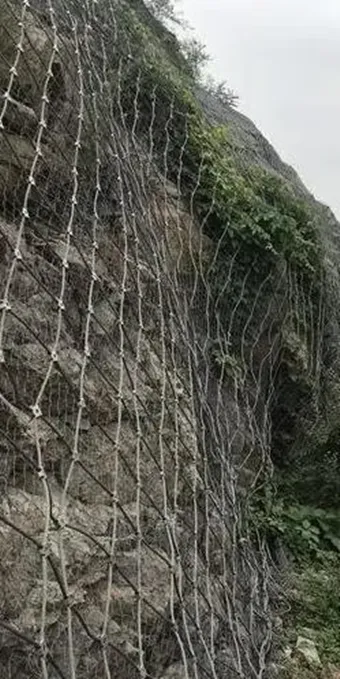
Cut slopes, road embankments and excavation faces fail when surface material loosens, ravels and slides. Soil nailing reinforces the deeper mass by installing closely spaced steel bars into the slope, bonded in grout, that pin the soil block together and act in tension. But nails alone leave the surface between them vulnerable to erosion and shallow sloughing. That is where stabilization mesh comes in: a facing of high-tensile steel wire mesh or double-twist hexagonal mesh is tensioned across the face and clamped under the nail bearing plates, distributing the restraining force and holding the surface skin in place. Together they form a coherent system, deep reinforcement plus surface confinement, that stabilises slopes too steep or weak to stand alone. Zhongman manufactures the facing mesh that completes soil-nailed systems for highways, railways and civil sites worldwide.
Choosing the Facing Mesh
The facing must be strong enough to span between nails and durable enough to survive decades on an exposed face. High-tensile steel wire mesh, woven in a diamond or hexagonal pattern from wire of roughly 3 mm at tensile strengths around 1770 MPa, carries the membrane forces between anchors with minimal deflection. Double-twisted hexagonal mesh, the gabion family weave, offers excellent non-ravelling behaviour and is favoured where vegetation establishment is desired, since soil and seed can be applied behind it. Cable net panels handle the largest spans and loads. The mesh aperture, wire diameter and tensile grade are chosen to match the nail spacing and the surface pressure the design requires. Zhongman produces high-tensile mesh, double-twist mesh and cable nets to specified diameters and apertures, so the facing matches the geotechnical design exactly rather than forcing the design to fit stock.
Nail Pattern, Plates and Tensioning
The geometry of a nailed-and-meshed slope is set by the stability analysis. Nails are typically installed on a grid of one to two metres, inclined slightly downward into competent ground, their length determined by the failure surface they must cross. At each nail head a spiked or domed bearing plate clamps the mesh, and the mesh is pre-tensioned so it presses against the face rather than hanging slack. Correct tensioning is what turns a draped net into an active facing: it confines the surface and mobilises the mesh strength immediately. Edge and crest anchorage, usually a perimeter cable, completes the load path. The interaction between nail spacing, plate size, mesh strength and pre-tension is a design exercise, not a field guess. Zhongman supplies the mesh, cables and accessories to suit your specified plate and nail layout.
Coatings and Vegetation
A stabilization facing is meant to last the life of the structure, so corrosion protection is central. Hot-dip galvanizing is the baseline; for wet, coastal or chemically aggressive slopes we recommend Galfan zinc-aluminium, which substantially outlasts pure zinc in salt and acidic runoff. A PVC overcoat is available where abrasion or chemical attack is severe. Where a green, vegetated finish is wanted, double-twist mesh combined with erosion-control mats and hydroseeding lets plants root through the facing, so the slope stabilises mechanically at first and biologically over time, improving appearance and reducing surface erosion. The coating choice should reflect both the environment and the maintenance access, since re-treating a high face is costly. Zhongman applies certified galvanizing and Galfan coatings and can supply mesh suited to vegetated, bio-engineered slope designs.
Specifying and Sourcing the System
A complete specification names the facing mesh type with wire diameter, tensile grade and aperture, the nail and plate layout it must suit, the pre-tension and edge anchorage, the coating system with documented mass, and the governing standard. For overseas projects, require container-ready packing and traceable mill and coating certificates so the mesh matches the drawings on site. Zhongman manufactures high-tensile mesh, double-twist hexagonal mesh and cable net panels for soil-nailed slope stabilisation, all certified and packed for export. Whether you are stabilising a single cutting or a long highway corridor, send us your slope geometry, nail layout and design loads and our engineers will recommend the matching facing, provide samples for approval, and return a costed, compliant quotation you can build from.