The Role of Mesh in Reinforced Concrete
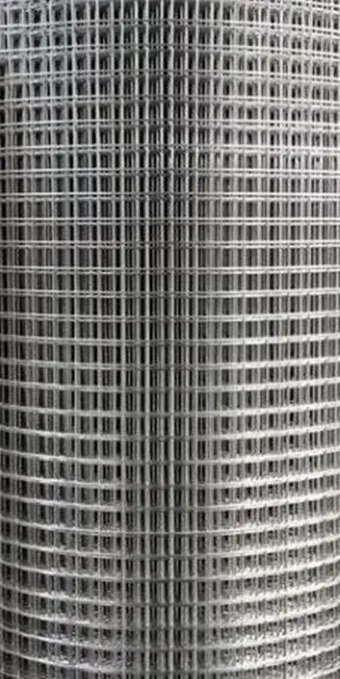
Welded wire mesh, sometimes called welded wire fabric or reinforcement mesh, is a grid of cold-drawn steel wires resistance-welded at every intersection. In concrete construction it controls cracking, distributes loads, and provides tensile strength where plain concrete is weak. Unlike loose rebar tied by hand, mesh arrives as a flat sheet or roll with consistent spacing, which speeds placement and guarantees uniform cover. It is the workhorse reinforcement for ground slabs, driveways, industrial floors, road pavements, and precast panels. For contractors and importers, mesh offers a predictable, factory-controlled product that reduces site labor and improves quality consistency. At Zhongman we manufacture reinforcement mesh to a range of wire diameters and grid sizes, supplying builders and distributors worldwide who need reliable fabric that meets project drawings and structural codes without surprises on delivery.
How Welded Mesh Strengthens Concrete
Concrete carries compression well but cracks under tension and shrinkage. Welded mesh embeds a continuous steel grid within the slab so that when the concrete tries to crack, the welded wires hold the sections together, keeping crack widths small and preventing them from propagating. The welded intersections create mechanical anchorage along the entire length of each wire, distributing stress across the grid rather than concentrating it. This is why properly placed mesh dramatically reduces random shrinkage cracking in floors and pavements. Correct positioning is essential: mesh must sit at the right depth within the slab, typically in the upper third for crack control or near the bottom for structural spans, supported on chairs or spacers. Proper concrete cover protects the steel from corrosion. When specified and placed correctly, welded mesh extends slab service life and lowers long-term maintenance for owners.
Common Specifications and Sizes
Reinforcement mesh is defined by wire diameter, grid spacing, sheet dimensions, and steel grade. Typical wire diameters range from about 4 mm for light crack-control fabric up to 12 mm or more for structural mesh, with square apertures commonly 100 x 100 mm, 150 x 150 mm, or 200 x 200 mm. Sheets are often produced at 2 x 6 m or to customer-specified panel sizes, while lighter fabric ships in rolls. Steel grades follow regional codes, and yield strength is a key specification for structural design. Buyers should also consider whether plain or ribbed wire is required, as ribbed wire improves bond with concrete. Because grid and diameter combinations are nearly limitless, we manufacture to order, matching the engineer's bar schedule so the delivered fabric drops directly into the design without field modification or wasted material.
Coatings and Durability Options
Most reinforcement mesh is supplied as plain black steel because it is fully encased in alkaline concrete that naturally protects the steel from corrosion. However, in aggressive environments—marine structures, de-icing-salt-exposed pavements, or thin precast elements with low cover—additional protection pays off. Galvanized mesh resists corrosion during storage and in low-cover applications, while epoxy or PVC coatings are used where chloride attack is a serious concern. The right choice depends on exposure class, expected service life, and budget. We offer plain, hot-dip galvanized, and coated reinforcement mesh, and we can advise on which option suits your climate and structural code. For buyers serving coastal or industrial markets, specifying a protective coating up front avoids costly remediation later and gives your customers a longer-lasting finished structure.
Standards and Quality Assurance
Reinforcement mesh is governed by national and international standards covering wire properties, weld shear strength, and grid dimensions. Common references include ASTM A1064 for steel wire and welded fabric and EN 10080 for reinforcing steel in Europe. Weld shear strength is a critical quality measure, since weak welds defeat the purpose of the grid. When sourcing, request mill test certificates, weld shear test data, and dimensional tolerances. Consistent wire diameter and accurate, square grids ensure the mesh performs as the designer intended and passes site inspection.
Order Reinforcement Mesh From Zhongman
Zhongman is a Hebei manufacturer and exporter of welded reinforcement mesh, producing plain, galvanized, and coated fabric in custom wire diameters, grid spacings, and sheet sizes to match your structural drawings. We supply ASTM A1064 and EN 10080-referenced specifications, weld shear and mill test certificates, and export packing built for long-haul shipping. Whether you are a contractor sourcing for a single project or a distributor stocking standard sheet sizes, we tailor each order and consolidate it with other product lines to cut freight. Send us your bar schedule or grid requirements and we will return a competitive quotation and samples promptly.