How the Three Types Join Bars
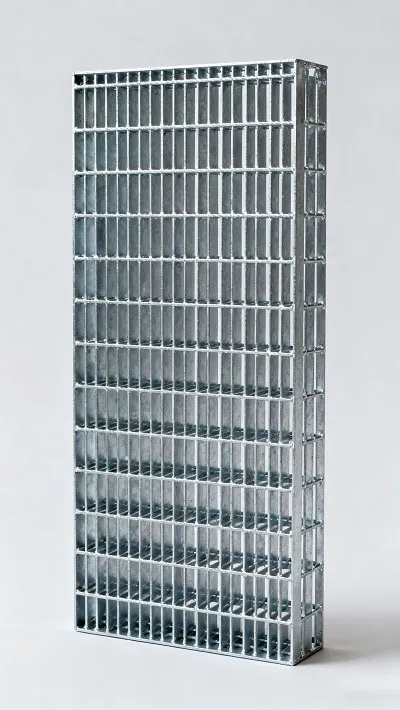
All bar grating consists of bearing bars carrying load and cross bars holding the panel together, but the way those bars are joined defines the three main types. Welded grating uses automatic resistance welding to fuse cross bars onto the bearing bars at every intersection, creating a rigid, integral panel. Swage-locked grating presses cross bars into pre-punched holes in the bearing bars and then swages, or deforms, them to lock mechanically without welding. Press-locked grating forces cross bars into slots in the bearing bars under high pressure so the two interlock tightly, again without welding. The joining method drives strength, appearance and which materials can be used, so it is the first decision to make when specifying grating.
Welded Steel Grating
Welded grating is the global workhorse and usually the most economical for carbon steel. Resistance welding at every junction produces a strong, stiff panel that handles heavy industrial loads, vehicle traffic and demanding platforms. It is fast to produce in volume, which keeps cost down, and after fabrication it is hot-dip galvanized so welds, bars and edges are uniformly protected. The visible weld marks give a robust, industrial look that is perfectly acceptable for plants, walkways, drains and offshore structures. The main limitation is material: welded grating is best suited to carbon steel, since welding aluminum or stainless to the same quality at production speed is harder and costlier. For most heavy-duty applications, welded grating offers the best strength per dollar.
Swage-Locked and Press-Locked Grating
Swage-locked and press-locked grating are mechanically joined, which makes them ideal for materials that are difficult to weld cleanly, especially aluminum and stainless steel. Swage-locked grating is popular in aluminum for lightweight, corrosion-resistant platforms in water treatment, marine and architectural settings; the swaged joint is strong and the panels are easy to handle. Press-locked grating delivers a clean, flush, attractive surface with a slim profile, making it a favorite for architectural and pedestrian areas where appearance matters. Both avoid the heat distortion of welding and keep the parent metal's full corrosion resistance, but they generally cost more than welded carbon steel grating and may carry slightly different load ratings, so always check the manufacturer's load table for the specific type and material.
Choosing by Material, Load and Look
Match the type to your priorities. For maximum strength at lowest cost in carbon steel, choose welded grating. For lightweight, corrosion-resistant aluminum platforms, swage-locked grating is the standard. For a refined architectural appearance or stainless and aluminum in pedestrian areas, press-locked grating shines. Then layer in load and span using the correct load table, the surface finish (serrated for slip resistance or plain), bearing bar size and spacing, edge banding and coating. Carbon steel should be hot-dip galvanized to ASTM A123 or EN ISO 1461; aluminum and stainless are typically supplied mill finish or anodized. Getting the type right first prevents over-paying for a premium joining method when a welded panel would have performed identically.
Edge Banding, Cutouts and Fabrication
Whatever joining method you choose, panel fabrication details affect both safety and cost. Cut ends of grating should be banded with a flat bar welded across the bearing bars to lock them in place, protect feet from sharp edges and stiffen the panel perimeter. Cutouts for pipes, columns and handrail posts need banding around the opening so loads transfer cleanly and the panel keeps its rigidity. Toe plates, kickplates and integral nosings can be added for stair treads and elevated platforms to meet access regulations. Saddle clips, bolts and welds are the common fixing methods, selected for the loading and whether panels must be removable. Specifying these details up front, rather than leaving them to the installer, ensures the finished grating is safe, code-compliant and correctly priced before it ships.
Sourcing Grating for Export
When requesting a quotation, specify the grating type, base material and grade, bearing bar size and spacing, cross bar pitch, surface, panel dimensions, edge details, coating and your destination country. Standards alignment, whether NAAMM, ANSI or EN, ensures load ratings and safety factors match your local code. Export packing must protect panel edges and finishes for ocean freight, with optimized container loading to control cost. As a Hebei-based manufacturer and exporter, Zhongman produces welded, swage-locked and press-locked grating in carbon steel, stainless and aluminum, hot-dip galvanized and fully customizable to your loads and spans. Tell us your application, load and material preference, and our team will recommend the most suitable grating type and prepare a tailored export quote.