decorative panel
Perforated Metal
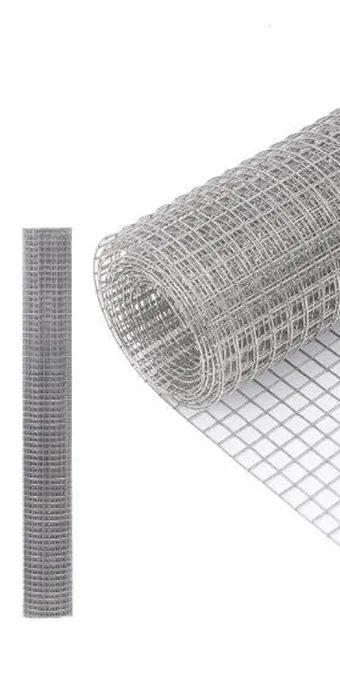
Square-hole perforated metal delivers a higher open area and a crisp geometric grid, ideal for sizing screens, modern facades and applications where maximum throughput or a clean linear look is required.
Description
Square-hole perforated metal delivers a higher open area and a crisp geometric grid, ideal for sizing screens, modern facades and applications where maximum throughput or a clean linear look is required.
Square hole perforated metal trades the round hole's curved economy for raw throughput. Because square openings pack tightly into a grid, this pattern reaches open areas approaching 79%, the highest of any standard perforation. Zhongman punches square holes in straight rows for a clean architectural grid, or in diagonal staggered arrangements for structural balance. A classic specification is 1/8" square on 3/16" centers, but we cover everything from 2 mm sieve apertures to bold 25 mm openings. The defined corner-to-corner aperture makes square holes the pattern of choice wherever particles or objects must be separated by exact dimension rather than by the narrowing throat of a circle.
Square holes provide a precise, measurable opening on all four sides, so screening and grading results are highly repeatable, a key advantage in aggregate, grain and recycling operations. The grid layout gives a sharp, contemporary appearance that designers favor for facades and interior screens. With very high open areas available, square-hole sheet maximizes airflow, light and material passage per square meter, reducing the panel area needed for a given duty. The straight-line pattern also simplifies cut-to-size fabrication because holes align with the sheet edges. We can supply the same aperture across multiple thicknesses, letting you trade durability against weight without changing the screening characteristics.
Apertures range from 2 mm for fine sieving up to 25 mm for coarse scalping screens, with bar widths (the metal between holes) tuned to balance open area against panel strength. High-open-area patterns such as 10 mm square on 12 mm centers exceed 69% open. Materials include cold-rolled and galvanized steel for industrial screens, abrasion-resistant grades for aggregate, and aluminum or stainless 304 for architectural and food applications. Thickness runs from 0.5 mm decorative sheet to 6 mm wear screens. We offer straight or staggered layouts, unperforated margins for bolting into screen frames, hooked or flanged edges, and powder-coat or galvanized finishes. Drawings for replacement vibrating-screen decks are quickly matched.
Square hole perforated metal dominates separation and grading duties. Quarries and mines use heavy abrasion-resistant decks on vibrating screens to size crushed stone; grain elevators and food plants use it for cleaning and calibrating seed and cereal; recycling lines use it to sort glass, plastic and metal fragments. Architecturally, the grid pattern appears in ventilated facades, elevator cab panels, ceiling tiles and feature screens where a precise modern aesthetic is wanted. The high open area also suits speaker grilles and large ventilation panels. Wherever exact particle sizing or maximum open area matters more than curved-edge strength, the square hole is specified.
Zhongman supplies square-hole screening decks and architectural grids to customers on five continents. We understand the difference between a screening order and an architectural order: for screens we focus on aperture accuracy, wear life and frame-ready edges; for facades we focus on flatness, consistent grid alignment and flawless coated finishes. Our presses hold aperture tolerance to +/-0.1 mm so grading curves stay consistent batch to batch. We provide open-area data, material certificates and abrasion-grade options, and we package screens to survive ocean freight without distortion. Send us a worn screen sample or a facade elevation, and our engineers will return a manufacturable specification and competitive quotation.
Products
decorative panel
embossed perforated
hexagonal hole
acoustic panel